Powered By Blogger

Thursday, June 27, 2013

Women at Work: Funny AND Successful


Humor-wise, author, humorist, and feminist, Dr. Gina Barreca, sees the world changing for women at work. "Humor from women," she says, "is not only increasingly acceptable both individually and in a professional setting: it’s expected. It’s regarded as part of leadership skill-set. Humor is an indication of quick-thinking, careful listening, an ability to take controlled risks and the desire to play well with others."

Here's my advice for women about being funny at work: use humor strategically. See details below. There is evidence that a woman’s good sense of humor can benefit her career. When 200 executives were asked to name the qualities that kept women from succeeding, lack of a sense of humor was near the top of the list.

Using humor improves a woman’s chances of attracting power and credibility, but women should be aware of a double standard when attempting to inject some humor into a situation. A woman telling a joke is not likely be viewed with the same acceptance as a man telling the same joke. So says psychologist Steve Wilson, an internationally recognized authority on applied and therapeutic humor.
 
Viva la Difference?
Understanding the gender issues associated with humor helps women benefit from the strategic use of humor, which has traditionally been available primarily to men in the workplace.
 
·         Men and women have somewhat different senses of humor; women's humor tends to be kinder than men's.
·         Men will joke about almost anything (gratuitous humor); women's humor tends to be empathetic, situational, or funny stories about the family or everyday life; creating harmony where there has been tension.
·         Men tend to be comfortable telling jokes to anyone who will listen; typically, women are more comfortable telling jokes to small groups of people they know well.
·         Women have greater social permission than men to laugh at even the smallest amount of humor. Men often feel a “masculine imperative” to make others laugh while also daring others to “make me laugh!”
·         In our culture, it is generally expected that the man will initiate the humor and the woman will be passive and receptive; and, men and women have different comfort levels about taking center stage or having power.
·         Men are more expected to be able to take "practical" jokes and dish them out.
 
Management consultant, Dr. Barbara Mackoff says that women in business need to show a good sense of humor. “In reality,” she says, "a woman can be funny and still maintain her credibility."
 
Funny, credible, and VERY successful
Writing for FORBES about humor as a key to success at work, Jacquelyn Smith says, “Whatever the reason might be, if you or your colleagues tend to be dry and dull in the office, you’ll want to work on injecting more humor into your workday.”  Smith quotes Lynn Taylor, workplace expert, “You don’t have to be a stand-up comedian, but well-placed humor that is clever and apropos to a business situation always enhances an employee's career.”

Showing one’s good sense of humor has advantages in hiring, promotion, and leadership opportunities. Long the hallmark of a pleasant personality, employees with a sense of humor are viewed as having highly desirable traits required of today’s leaders, executives, managers and supervisors: flexible, creative, and adaptable to change.

When you use humor you do not stop being serious about your responsibilities, values, goals, and beliefs; you show that you can take yourself lightly. Studies show that executives believe that employees with a sense of humor do a better job; and, CEOs prefer job candidates with a sense of humor. The two most desirable traits in leaders were found to be a strong work ethic and a good sense of humor.  Donna Couper, a business consultant, says, "Even in a job interview, assuming you're qualified for the position, showing that you have a sense of humor will make your prospective employer feel more comfortable with you."

Effective work teams develop a special form of group humor called "the inside joke", a humor-in-common language that plays a bonding role, strengthening loyalty, and making the work environment more pleasant and, yes, more productive, too.
 
 
Much joking fits in with a competitive style that is more comfortable for men. Certainly, women do tell jokes, and many can do it well.  However, according to Professor Deborah Tannen, "Since [women] are not driven to seek and hold center stage in a group, they do not need a store of jokes to whip out for this purpose." She also reported, "There are fewer such (story-telling) personalities among women than among men. Many women who do tell jokes to large groups of people come from ethnic backgrounds in which verbal performance is highly valued.  Many women are less likely than men to tell jokes in large groups, especially groups including men."

Jenna Goudreau, FORBES staff writer about business and women’s leadership, calls the idea that humor is dangerous in the office is “old-school HR.” Rapidly going out of vogue are Victorian ideas about laughter and humor such as: women should always be able to take a joke but not get a certain innuendo; women should laugh along with the laugh track; smile perpetually; and, women should not laugh with their mouths open.

 
Advice For Women Using Humor At Work
1. Don't merely imitate men's humor. Women's humor has the advantage of tending to be more personal and situational, with the effect of being harmonizing.

2. You do not need to tell jokes: a warm smile, a true story, the “Erma Bombeck” view of things, or a well-timed ad lib can bring even more benefits than jokes. Beverly Sills said, "I can't be happy every day, but at least I can be cheerful."

3. Use only humor that fits you, that fits the occasion and the audience, and when the time is right (not “too soon”).
4. Promote the use of humor in company newsletters and on bulletin boards.

5. Encourage "humor breaks" or times when everyone can lighten up for a few minutes.
6. If the joke has to be "on" someone, make it yourself, but NEVER belittle yourself with a joke.

7. Don't poke fun at abilities, race, religion, gender or anything that other people couldn't change in the next five minutes.
8. If you do decide to tell jokes, practice privately until you can tell them well.

CAUTIONS: Be wary of humor overkill. The “class clown” may be a distraction and barrier to teamwork. When it comes to humor, everyone must be sensitive and sensible. There is no place in the work place for humor that is sarcastic, ridiculing, uses taboo language, or is sexual, sexist, racist, age-ist, or otherwise puts people down. Use humor that lifts people up, and draws them together.
Goudreau cites psychologist Steven Sultanoff, PhD, an expert on applied humor, saying, “used effectively, humor helps people get along, decreases turnover and increases productivity. And that’s no joke.”


Monday, June 10, 2013

Why I Love AATH (and why you might want to join)

 
I have been a member of Association for Applied and Therapeutic Humor (AATH) for more than 20 years. It's a pretty nice group to belong to. If you belong, you have already experienced what I am about to describe. If you are not yet a member, you might want to consider joining.  I have memberships in other organizations in this field, but AATH suits me in particular ways that I will try to explain.
AATH epitomizes the sage advice to take your responsibilities seriously but take yourself lightly.

AATH Humor Academy Graduates - Keen Minds, Kind Hearts, Quick Wits

AATH inspired and encouraged me to create the most worthwhile professional endeavor of my life, to reach around the world for humor’s sake, and create the World Laughter Tour.


Walking the Talk: The Medium is the Message
Through the AATH website, newsletter, and especially at their conferences, you get to laugh and learn and be inspired. You get support for being a person who believes that humor and fun are important life forces. You get to associate with the leading thinkers and researchers in the field, and discover that they are accessible and down to earth. You are encouraged to develop your personal brand of accomplishing lofty laughter goals, contributing to a better world, and having fun, too. That alone is worth the price of admission.

AATH is a professional association. You become a member. Membership has its benefits. What attracted me to it in the first place? What keeps me coming back? What do I hope will never change?
The More Things Change, The More I Would Like Some Things to Stay the Same
Change has been trending for several years in how people affiliate, communicate and educate. A trend toward home exercise equipment instead of going out to a fitness club. A trend toward e-mail and texting instead of writing letters or making a phone call.  Updating on social media instead of meeting at the local coffee house. Getting information by surfing the Internet instead of subscribing to print magazines and journals; staying home instead of traveling to attend professional conferences.
These trends have affected AATH. To remain viable, AATH will go with the flow and make changes that will be real improvements. But, some things cannot be replaced with modern technology.

Life is a psycho-social proposition. We are social animals. If we don't get the social part of life right, we will go psycho! AATH has a beautiful social side.

My AATH friends believe in me even when I am unbelievable. We do that for each other and for everyone who shares that vision.
Rubbing Elbows With the Best & Brightest


Other organizations are more focused on doing the scholarly research about humor, or exploring the literary depths of wit and humor, but AATH is the ‘nuts & bolts’ of therapeutic humor, with a strong focus on practical applications.

Cooler Heads Prevail
AATH helps me understand the science of humor and its implications for the human condition and a better world. The membership is largely clearly compassionate comrades who use their humorous perspectives to promote harmony, peace and love.
AATH communications and conferences are fun, although not just for fun; they are entertaining, but not just for entertainment.

AATH has a nurturing quality toward its members and toward the larger world. We honor those who paved the way, from Hierokles and Philagrios to Norman Cousins, Vera Robinson, Jerry Lewis, Dr. William Fry, Jr., and Red Skelton.

I think these qualities are deep in the roots and origins of AATH, which evolved out of an organization called "NFL - Nurses For Laughter"; healthcare professionals who banded together to support each other to exploit humor in every positive way. They brought with them an appreciation of good science and standards of practice and, in spite of a dearth of evidence compared to what is now available, they had insights into the possibilities that humor could play a significant role in caring and healing. They knew that having fun could bring them relief from their occupational stresses without diminishing their professionalism, and might actually help them be more effective.

The Mix is Magical
In AATH there is an odd mixture of smart, talented, witty people and ideas that I find very appealing. Serious and goofy, supportive and caring friendships, silly and simultaneously trying to illuminate the human condition. This creates an energy and a balance that I like.
 

Clowns, jugglers, patients, poets, musicians, comedians, educators, and scientists welcome the opportunity to mix it up. A fabulous mix of funny and serious personalities discovers that they are actually like-minded, kind-hearted folks. Some are thinking about humor; most are doing something about it in venues of business, healthcare, and education.

This is the place where I can take in a lecture on ‘humor and pain’, perform my yo-yo tricks, join my esteemed colleagues putting napkins over our heads while miming eating clown noses at a banquet, and watch otherwise serious professionals let loose creative send-ups of who we are.

 
I hope that the values and character that come from the roots of AATH will not change. They are reasons I have maintained my membership for so many years.

From time to time, I attend the conferences of related organizations, but, AATH remains my favorite. I hope it will thrive and grow and make a place for people like me for a long, long time.

Every week during the 16 seasons of the series of Dancing With The Stars, contestants have been kept in suspense as to whether they are “safe” and will get to compete again, or whether they are “in jeopardy” and therefore might have to leave the show.
Being in jeopardy is nerve-wracking. Being safe is uplifting, and it renews hope.

My wish for AATH: Be safe and stay seriously funny for a long time. Continue to be vibrant and relevant and fun in your own unique way. I'm glad I am a member.

Maybe you would like to join, too? AATH

Sunday, February 10, 2013

A Funny Valentine Could Be Serious, Re-visited

"In America, there is one divorce every 13 seconds. That’s 6,646 divorces per day, and 46,523 divorces per week." -McKinley Irvin blog
 
 
At about this time every year --near Valentine's Day-- I check the latest statistics on marriage and divorce. I figure that if divorce rates are declining substantially, I will stop giving advice to the lovelorn. Here we go again.

Discovering the succinct if shocking facts in several sources this year, I decided to explain some of the most powerful ideas for finding lasting love in a recorded one-hour webinar  "Authentic Intimacy: Finding Lasting Love".  Now, couples can study the 14 Predictors for Dating Relationships, the 27 Terms & Conditions For Successful Marriage, and how to add a healthy dose of humor, ad infinitum (or ad nauseum, whichever comes first).

As a BONUS, I suggest 2 Moral Obligations and 6 Nearly Magical Phrases that will keep relationships humming along. These strategies may come too late to save already failing marriages, or those already disrupted by divorce, but they can be insurance for the success of love in the future.

Let's compare notes. In addition to having gotten my own nose bloodied (so to speak) in a few relationships, I have counselled hundreds of people about relationships professionally. Taking my own advice, I have been on the relationship practice-makes-perfect-program and believe I have finally got it right.

I am especially interested in hearing the advice you would you give to those seeking long-lasting love if you have found a way to get out of the relationship revolving door and into a successful love relationship, or if you are in one of the occupations where people tend to talk a lot about their relationships (bartender, taxi driver, barber or hairdresser).


Most people already know that around 50 percent of marriages in the United States end in divorce. The number is similarly high in many other developed nations.

When you break that down by number of marriages:
 ■41 percent of first marriages end in divorce.
 ■60 percent of second marriages end in divorce.
 ■73 percent of third marriages end in divorce.

The average length of a marriage that ends in divorce is eight years.

People wait an average of three years after a divorce to remarry (if they remarry at all).

The average age for couples going through their first divorce is 30 years old.
About 1 percent of the total number of currently married same-sex couples gets divorced each year, in comparison to about 2 percent of married straight couples. (Note that the percent of couples that get divorced eventually is 50 percent, but only one or two percent get divorced in a particular year.)
Click here to read all of that particular report.


It appears that there is still a need for sound advice for couples who are dating and those whose marriages have fallen into unsatisfying ruts of boredom, anger, and misery.

For example: Humor is a skill worth developing.

"A relationship without humor is like shaking hands with gloves on."
Sherry Suib Cohen
 

Studies show that sense of humor ranks at the top of lists of desirable traits. Brides-to-be who were asked what they admired most in their man, most often mentioned as attractive: sense of humor (outranking romantic nature, intelligence, and good looks). It seems that women take the decision to marry seriously, but the courtship has also got to be lighthearted. Humor also topped the lists in reports by Newsweek and in Men's Health. But, it takes more than just telling jokes.

Here are some of my perennial suggestions for adding a touch of humor to romance.

* Waltz your partner around the room while you hum their favorite song.
* Leave little surprise notes around the house for your partner, such as, in the freezer: "Honey, the meatloaf was great!" or, about 100 pages ahead of the bookmark in their bedside mystery or Fifty Shades book: "I don't know whodunit, but I'd like to do it with you."
* Slip a new CD into their car stereo if they've been complaining about traffic jams on the way home.
* Use a waterproof marker to draw a heart encircling your initials on the hand-sanitizer dispenser they take to the gym.
* Put a candy bar in their briefcase if you know they love chocolate.
* In the middle of the stack of papers they bring home from the office, slip a note that says "I love you!"

I enumerated even more of these hard-won insights in my book, "Toilet Paper, Toothpaste, and Tuna-Noodle Casserole."  The title was inspired by three of things couple had knock-down-drag-out fights about in my office. You probably know what the toilet paper and the toothpaste conflicts are, but one couple in pre-marital counseling almost cancelled their wedding because, "She doesn't make tuna-noodle casserole the way my mother did!" (When the book was originally published, it included MY mother's recipe. Yum!)


Relationship Autopsy
Talk about love is blind! Even when a dating relationship is doomed to eventual disaster, most people do not pay attention to the warning signs. Caught up in the thrill of infatuation, social pressures, or emotional neediness, we ignore, dismiss, and rationalize the signals of eventual failure. Some of us only figure it out in the post-relationship examination. Realizing that the disaster could have been avoided if we had only listened to the signals --including our best friends' and families' exasperated pleadings-- is a valuable lesson for the future.

When the traditional marriage vows were written, life expectancy was only about 40 years, and the average marriage lasted only about 15 years. Now we have the potential for 80 years of marriage. The standard vows are too vague and too few to sustain that long of a relationship.

Examples of Predictors of a Dating Relationship: Is your prospect really available? Are they truly free of past relationships legally, mentally, and emotionally? If your prospect is legally divorced, are they emotionally divorced as well? Starting a new relationship before a previous one has ended usually creates painful complications.

Does your prospect have a good sense of humor? Do they laugh and smile easily and often? Do you bring out the laughter in each other? Can they ease tension by finding humor in sticky predicaments without trivializing them? Is their humor good-natured rather than mean-spirited or angrily sarcastic? “Yes” to these questions is a very good sign.

Terms & Conditions of the Love Contract


In the age of modern technology, when we are mindlessly clicking AGREE to "I have read the terms of usage", commitmentphobia can arise because, by comparison, the terms of the love contract seem extremely vague. With my car lease, I know what I'm getting into. But, love?

The 14 tips for predicting the future of a dating relationship, and the 27 commitments, form the basis of the contemporary love contract. Individuals and couples who study and implement these can greatly increase the odds of their finding happiness together for the long term.

Here are a few of the specific terms of the love contract for couples to negotiate and agree to.

I realize that fairy-tale romance doesn't really exist and that "happily ever after" demands a lot of work and that "getting married" is a life-long process; I will be patient..
I promise I will confront problems as they come up, not wait and hope they will go away.
I promise that I will never be too busy to sit and watch the sunset with you.
I will develop my sense of humor and invite you to laugh with me.

For the sake of lovers everywhere, what advice would YOU give?
 

Saturday, January 26, 2013

Ten Things You May Be Doing Wrong When Creating Content - Part 2

"Ten Things You May Be Doing Wrong When Creating Content & Presenting Programs" is a series of brief blogs you can use to make yourself more valuable and more memorable to your clients, and to differentiate yourself in the marketplace. These are in no particular order; they all are important.
 
#2 Not Being in "Continuous Content Collecting Mode"
 
Your programs will become stale unless you create new content from time to time. Depending on your situation, you will want to refresh and update your content more frequently.
 
You should be looking for possible content everywhere and all the time. When the time comes, you will have created a rich resource for relaxed researching in plenty of time. You'll have lots to choose from to find exactly the right content.
 
It will be even more helpful if you organize it for future reference. Use 3-ring binders, standard manila file folders, or make digital folders on your hard drive. Arrange them alphabetically or by topic, or by topic alphabetically.
 
If you file future content possibilities digitally, be sure to name each file with something you are likely to remember, or at least might find easily using you computer's internal hard-drive search engine. You might think now that you'll never forget it, but... I'm just saying.
 
When you come across a quotation, an article, a research report --anything that might have potential to relate to your topic and make it more memorable or easier to understand or interesting, snag it and organize it!
 
Trolling and Snagging For Fun & Profit
Having the right material to present at the right time becomes part of your brand. It makes your programs more valuable and more popular.
 
"We still need Guam!"
Our 5 year-old grandson, Isaac, has started to collect the US quarters that commemorate states and territories. We are all doing our bit --er, actually make that 2-bits-- to help him by checking our spare change for a coin he might need. He is lucky to have grandparents so dedicated that they pore over coins every time they receive change in a transaction. And, they go the extra step of specifically asking for change in coins!
 
We get the coins. We check them against the collection list. We snag the ones that match. Soon we will be on to pennies, nickles, and who-knows-what.
 
You should do the same thing to capture and collect content for all of your talks, keynotes, classes, PowerPoint, blogs, whatever.
 
Read newspaper and magazines with your eyes and a pair of scissors. Clip, tear out the part you 'might need someday.' ASAP, get it organized into a topical file.
 
You can scan almost anything from any printed document with your combo-printer, and even carry a portable scanner in an App like "Genius Scan+" right on your smart phone.
 
Realplayer and other programs now make easy for you to download video from almost anywhere on the Internet.
 
Have you seen a related motivation or informational poster, cartoon, or video on Facebook? Snag it! Then use other software to trim, edit, or otherwise enhance the video or image, and even convert to  a variety of viewable formats such as mp4, wma, wmv, mov. And, you can even extract just the audio for an mp3 file.
 
You should be trolling for material all the time. To paraphrase an old Tom Lehrer song satire, don't shade your eyes, let no one else's work evade your eyes, but do not plagiarize. Always give proper credit and attribution. And snag, snag, snag.
 
See an interesting sign in a store? Or anything happening anywhere? Use the camera in your smart phone to snag it! Send it to yourself via e-mail for future editing and incorporation into a program. 
 
Hear a clever phrase while at dinner in a restaurant? Write it down on a napkin; file it later. Or, use your smart phone to record it as a message to send to yourself. Try audio messaging Apps like Tango and Heytell, too.
 
Always be on the lookout!
If you usually wait until you get a booking or, worse, until the last minute, to look for material, you might still be able to do some quick trolling & snagging content using any of the great search engines, if you know how to do it. That reminds me of my grandmother's advice about being prepared, "If I had some peanut butter I would have a peanut butter sandwich, if I had some bread."
 
Keep your programs refreshed and powerful with material you find everywhere!


Saturday, January 19, 2013

Ten Things You May Be Doing Wrong When Creating Content - Part 1

"Ten Things You May Be Doing Wrong When Creating Content & Presenting Programs" is a series of brief blogs you can use to make yourself more valuable and more memorable to your clients, and to differentiate yourself in the marketplace. These are in no particular order; they all are important.

#1 Not using your own talents America's got talent, how about you?

Can you recite a poem, sing, play a musical instrument, tap dance, or juggle?
Have you memorized poetry or prose that is inspiring or informative?
Could you compose & perform a song parody, or invite the audience to join you in singing it?

Using the natural talents that you have developed to performance level, will make your programs more valuable and more memorable to your clients, and will differentiate you in the marketplace of presenters.

A minister revealed to me that in seminary school he was taught this simple formula for creating a sermon: Three Points and a Poem. I suggest a slight revision: Three Points and Your Talent.

You don't have to be a professional at your talent. Amateur is fine. You may want to get some coaching to craft something for inclusion in your program.

Enumerate your talents. Don't be bashful. Figure out which one(s) you can use to get your point(s) across. Don't make it "The All About Me Show", but use just enough talent-based content to amp up the value of your program a few notches.

Don't brag, just launch right into it. Don't brag about your talents because those are gifts of creation. They came with the territory. You didn't do anything to merit them.  What you can take credit for is what you do by way of developing those talents. And, even more, how you use those talents to help other people face life's challenges, achieve their aspirations, or just enjoy life.

You may have had formal training in some talent, but mine were developed mostly as hobbies, but I stuck with them and fine-tuned them. When I became a professional speaker, I realized I could use them for more than entertaining at family reunions. I could help people remember and be inspired to try making some lifestyle or work style changes. It helps that my audiences are more likely to stay awake and pay attention.

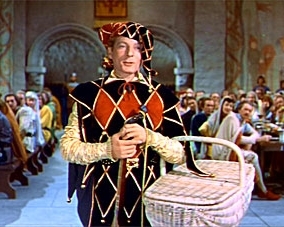
For example, my promotional material says, "To inform and enlighten his audiences, Steve Wilson intertwines substance and humor in ways you would never imagine from dazzling mental magic to expert level yo-yo-ing, to performance pieces." In this video clip I prove the point with a theatrical piece from "The Court Jester" that makes a great set-up for substantive content about applied and therapeutic humor & laughter for a professional audience.


Don't entertain just for the sake of entertaining. Balancing a folding chair on your chin might be impressive at a birthday party, but it is merely gratuitous unless you can clearly connect it to your content in the minds of your clients.

Your talents are your gifts. Use them in behalf of delivering programs with greater interest and benefits. It will pay off all the way around.

Nine more mistakes will be explained in future blogs. Stay tuned. Subscribe to this blog and share this with everyone who might need to be aware.

Saturday, December 15, 2012

A Response to Violence

Is It Really?

Today I am reading entries on Facebook from some laughter/humor colleagues asserting that yesterday’s shootings at an elementary school are proof that we need more laughter. Here’s one, "If we'd laugh more, there would be less violence, wars, fight... and we all laughed... really hard..."

Oh, my!

I am reminded of the man in an early documentary video about laughter in India. His cure for the troubles of the world, “Laughter alone is the solution!”

Oh, my!

A good argument could be made that laughter, humor, and mirth have survival value. But, “laughter alone” is hardly the solution.

What image do such assertions project about the mission, passion, and work of World Laughter Tour, its thousands of members, and others who form the loosely organized laughter movement? Over-simplified short-hand figures of speech can be easily misinterpreted, and portray the movement as seemingly not very thoughtful, perhaps even overly zealous for laughter.

I urge you, my readers and members of the World Laughter Tour, to project a more reflective and considered position. One that appreciates complexity, but is not deterred from ideals.

Situations and events have multiple causalities.

For instance, when we seek to foster a dozen new intergenerational laughter programs next year, or next February, when I present a program of classroom activities and support for caregivers in early childhood education, or when we promote laughing toys for kids, it is not because we believe that laughter is the only best medicine.
A Tool, Not the Whole Toolbox

Laughter is like an electric drill, a tool that delivers a desired result: a hole in the right place at the right time. It is not the whole toolbox. When the Beatles sang “All You Need Is Love,” that was a figure of speech.  We recognize that love is an action verb, not merely feel-good emotion.

What we call laughter programs encompass tools and experiences for more positive emotions and attitudes (emotional education); positive engagement with life and positive relationships, through Good-Hearted Living, for example. We synthesize evidence-based information from science, Positive Psychology, and ancient practices, in clinical, educational, consulting, corporate, and volunteer work.

We help individuals use life energies to choose and modify their life and work directions. We help individuals identify emotional and attitudinal factors, many of which can be self-administered practices that improve health and increase life satisfaction and well-being for clients, patients, residents, students, employee, and others.

And, yes, we have fun doing it.

What's so funny? Sometimes, we can't exactly explain why we are laughing. That's OK. But, my over-riding mission is to give people good reasons to laugh such as a good job, reasonable income, healthcare, adequate food, freedom from pain and fear and chaos. Now, that's a world you can live with. To get ideas for love-in-action, please re-read "FULL-BELLY LAUGHTER" and pass it on.

We can imagine a better world. And, anything we can imagine we can make happen.

The advice that medical researcher Dr. Lee Berk so generously offered to me at the beginning of the World Laughter Tour, I now offer to you, “Don’t ever get discouraged. You are doing the right thing.”

Steve

Sunday, December 9, 2012

You may say that I’m a dreamer...

You may say that I’m a dreamer
But I’m not the only one
I hope someday you’ll join us
And the world will be as one
"Imagine" by John Lennon

I need your help. Thank you in advance, my dear blog readers.

Actually, I am trying to enlist you in furthering the mission of the World Laughter Tour: Together, we can lead the world to health, happiness, and peace through laughter.

The operative word here is TOGETHER. I can't do it alone.

Did you know that the logo of World Laughter Tour is called The Happy World?
Happy World

Thousands of individuals around the world are already carrying the mission forward. One of the ways we are doing this is by encouraging people everywhere to try my program called Good-Hearted Living(tm) [GHL].

GHL is the most WONDERFUL, POWERFUL method I have ever discovered for improving life satisfaction and well-being. Put into daily practice, people find they have more positive attitudes, more positive emotions, and more positive interactions with others. In other word, greater life satisfaction and well-being. This, in turn, greatly increase the likelihood of having more laughter in their lives, which brings a multitude of benefits for mind, body, and soul.


And, you can be part of the movement, too. Especially if know someone who is fluent in a language other than English.

First, a word about THANK YOU. One of the six parts of the program is the practice of gratitude.

My friend, Nekane DeLeniz, whom I met in Caracas, is beautiful spiritual teacher, a woman both wise and smart, with a heart of gold. She posted this on Facebook:

It inspired me to search for THANK YOU in other languages. With help from friends (and computer technology), I have been able to put together this list:
Bedankt (Dutch)
Ank-thay Ou-yay (Pig Latin)
Masha danki (Papiamento )
Todah rabbah (Hebrew)
grazie mille (Italian)
Sapcibo (Russian)
Dankon (Esperanto)
Diakuju (Ukrainian)
cume on (Vietnamese)
Arigato (Japanese)
Tak dig (Danish)
Kiitos (Finnish)
efharisto (Greek)
Takk deg (Norwegian)
Obrigado (Brazilian Portuguese)
Mahusu mahuyu (Guajiro)
Size Teşekkür Ederiz (Turkish)
Na gode (Hausa)
شكرا لك Shukran (shoe-cron) (Arabic)
感谢您 (Xie Xie: Chinese)
Σας ευχαριστώ (Greek)
आपको धन्यवाद देता हूं। (Hindi)
감사합니다. (Korean)
ขอขอบคุณที่คุณ (Thai)

Here's where you come in. You can help raise the GRATITUDE consciousness of people around the world by adding to the THANK YOU list (send me you additions, please) and distributing it everywhere.

Here's something else we can all do. Through the kindness of friends, the basic instructions for the GHL program have been translated into English, Mexican Spanish, Chilean Spanish, Dutch, French, German, Hungarian, Italian, and Japanese. Nancy Jones even created a kid version. I have put them all into a single pdf file that you can have and you can distribute.

Copyright Disclaimer: Under Section 107 of the Copyright Act 1976, allowance is made for "fair use" for purposes such as criticism, comment, news reporting, teaching, scholarship, and research. Fair use is a use permitted by copyright statute that might otherwise be infringing. Non-profit, educational or personal use tips the balance in favor of fair use.

If you can help us get this translated into even more languages, we can touch even more lives and further the mission of a healthier, happier, and more peaceful --and laughter-filled-- world. Do you know someone who would translate this? Simply send them the file and have them send me their translation. They may contact me with any questions. I will keep posting the additional translations for you to distribute. Soon, the world will look like this:
I'm just saying...imagine...

Steve

PS I recently recorded a one-hour Webinar about GHL. You can get it, along with myriad extras such as videos, the slide images, and articles.